
Some posts on this site contain affiliate links. If you book or buy something through these links, I earn a small commission (at no extra cost to you). Take a look at my privacy policy for more information.
If you only have a limited window to explore several European countries, you’ll want to approach your trip precisely and purposefully. Time is a resource, just like money; if you spend it on transfers and logistics, you’ll arrive in each city tired and late. Get the logistics right and you’ll find enough time to enjoy local cafés, squares and museums, not airports and taxi queues.
Focus Your Map on Efficient Travel Corridors
Don’t scatter your destinations across the continent. Instead, choose 3–5 cities connected by short trips. For example, you might start in Barcelona, continue to Valencia, then Madrid, and finish in Lisbon. Each leg takes less than three hours, yet the journey offers plenty to discover with minimal transit time.
Keeping your travel legs short gives you more time to explore. Every hour lost in transit is an hour you won’t get back.
Anchor Two Major Cities
Start with a central hub with good flight connections and efficient arrival logistics. Use it to settle in, adjust, and enjoy. Then pick one or two secondary cities that can be reached quickly from the hub. This could be a train, a short flight, or a charter. End in a central hub, too, from which you fly out.
This structure means you’re not constantly adapting to new places every day. You get some stability, some novelty, and you don’t burn out racing around.
Choose by Time, Not Glamour
Europe’s train network is superb for many routes, and it links the city centre to the city centre, without wasting hours in security lines. However, trains are not convenient for intra-country routes. A short flight may eat less of your waking day if you’re covering long distances than a slow rail transfer. The trick is to calculate the actual door-to-door time. If flight plus airport transfer equals three hours, but train door-to-door is five, choose the flight.
For travellers with an extra budget, there are premium options. A private jet charter is excellent for that bespoke, ultra-fast leg. If you want to make every hour count, a charter lets you skip mass-airport congestion and fly direct between smaller airports. Imagine landing closer to your hotel and starting your afternoon with a coffee in town rather than waiting at baggage claim.

Make the Private-Charter Option Work for You
If you choose a charter, work with the operator to pick the optimal airport for your destination. You do not necessarily need to land in the biggest commercial one. Ask about boarding time: one of the selling points of private charter is that it often requires far less time at the airport. Confirm if your route is defined as one charter leg covering multiple stops (A → B → C) or separate contracts. The cost and convenience differ accordingly.
But remember: charter doesn’t exempt you from local transfers. You’ll still need to get from your hotel to the airfield and back to your hotel. Those hours count, so plan your accommodations and transfers as carefully as the flight.
Sample Itinerary for Multi-Country Travel
If you only have eight days and want to see more than one country, you must have a good strategy. Here’s a route that manages three countries without turning the trip into a race.
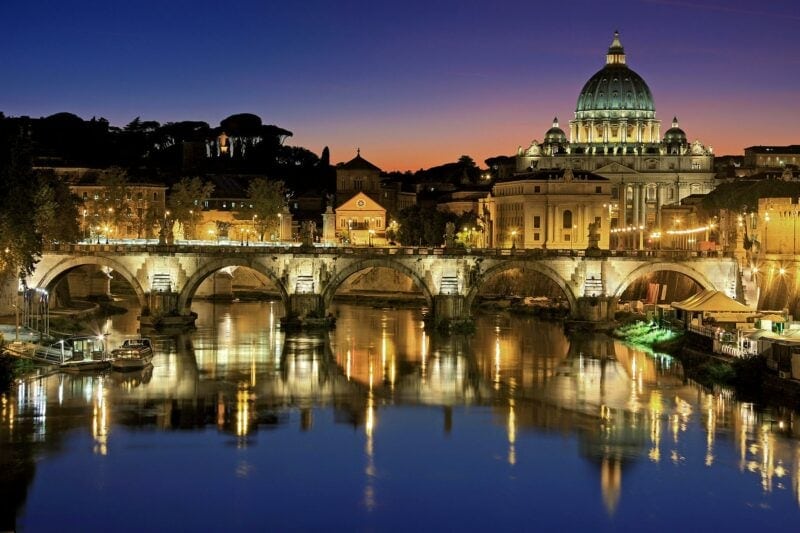
- Day 1–2: Arrive in Rome. Spend your first afternoon wandering without an agenda; the next day, visit the Vatican and lose yourself in Trastevere’s narrow lanes.
- Day 3: Take a morning charter flight to Vienna. Arrive by early afternoon, check in, and let the evening unfold slowly, perhaps at a café.
- Day 4: Devote a full day to Vienna, exploring its unique architecture, coffee culture, and the calm of the Danube.
- Day 5: Travel to Prague early by train or charter. Spend your first afternoon exploring the castle district.
- Day 6: A day for museums, cobbled streets, and dinner by the Vltava.
- Day 7: Keep this day flexible. Take a short excursion or simply rest, observe, and let the city settle into memory.
- Day 8: Fly home from Prague.
You’ve seen three countries, but never rushed. You’ve travelled far, yet never got exhausted. That’s the art of travel planning when time is short.
Make Each Day Count
The difference between a good trip and a great one often comes down to how you use your hours. Airports, check-ins, and transfers quietly steal them if you let them. So defend your time.
- Pack only a carry-on if possible..
- Stay in central hotels so your downtime isn’t eaten by commuting.
- Aim for early morning transfers so your afternoons in new cities don’t have to be half-spent upon arriving.
- Build one “unscheduled evening” where you do nothing fixed. It becomes your cushion if travel delays or fatigue hit. Sometimes, a good meal or an unexpected view is what you’ll remember most.

Don’t Let Time Limit You
You may not have unlimited days, but you do have limitless possibilities when you travel with intention. Structure your trip carefully, choose your routes wisely, and consider premium options for time-saving transfers. That way, you’ll arrive in each place refreshed and ready to explore. You’ll see more than you thought possible. And when you look back, you’ll remember the meals, the conversations, and the light through the windows, not the waiting rooms, the baggage claims, or the hours lost in transit.