
Some posts on this site contain affiliate links. If you book or buy something through these links, I earn a small commission (at no extra cost to you). Take a look at my privacy policy for more information.
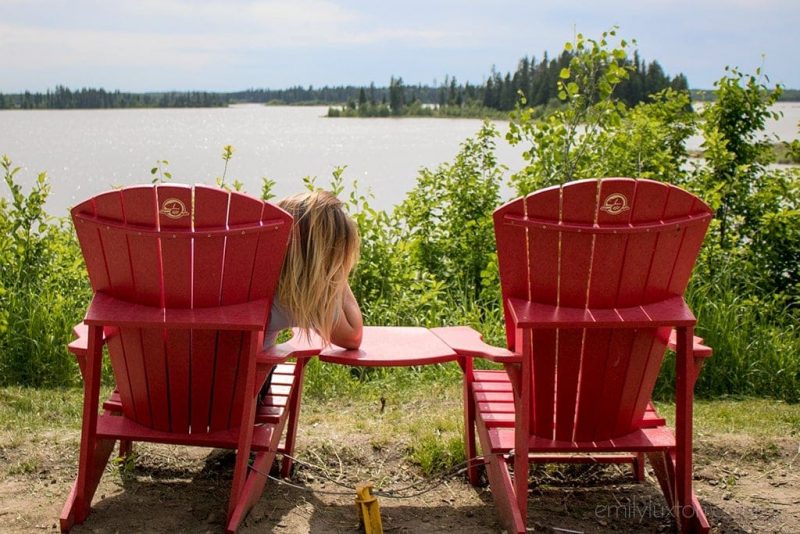
A mini guide to Elk Island National Park in Edmonton – to help you plan the perfect visit…
Banff and Jasper might be the best known of Alberta’s national parks, but they’re far from the only places to get outdoors in Canada’s sunniest province. About a 30-minute drive outside of Edmonton, Elk Island National Park is a 194km² space filled with sweeping prairies, whispering aspen forests, and glittering blue lakes.
Despite the name, this isn’t actually an island, and there are many more bison than elk to be found here! The National Park is named for the numerous small islands dotted within the lakes, and was originally a sanctuary for elk (the bison were introduced later).
Confusing name aside, Elk Island is a fabulous place to get outdoors and enjoy some of Alberta’s abundant natural beauty. It’s ideal for a day trip from Edmonton, or – for a true escape from the city – you can camp for a few days.
RELATED POST: 13 Amazing Places to Visit in Alberta
Top Things to Do in Elk Island National Park
Bison Conservation and the Backstage Bison Tour
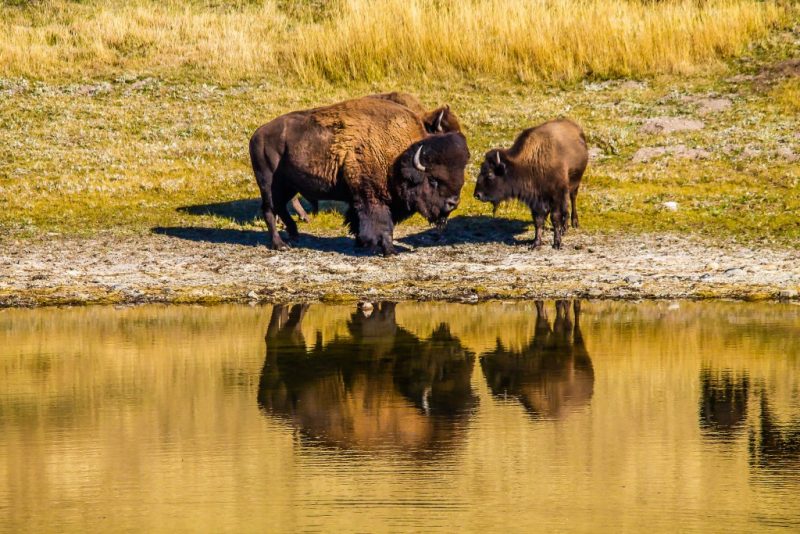
Before the Europeans settled in North America, there were some 30 million bison roaming in huge, ocean-like herds across the continent. As of 1889, the numbers had plummeted to less than a thousand. Today, thanks to conservation efforts like the one at Elk Island National Park, the numbers are slowly growing. Elk Island itself is home to just under a thousand bison.
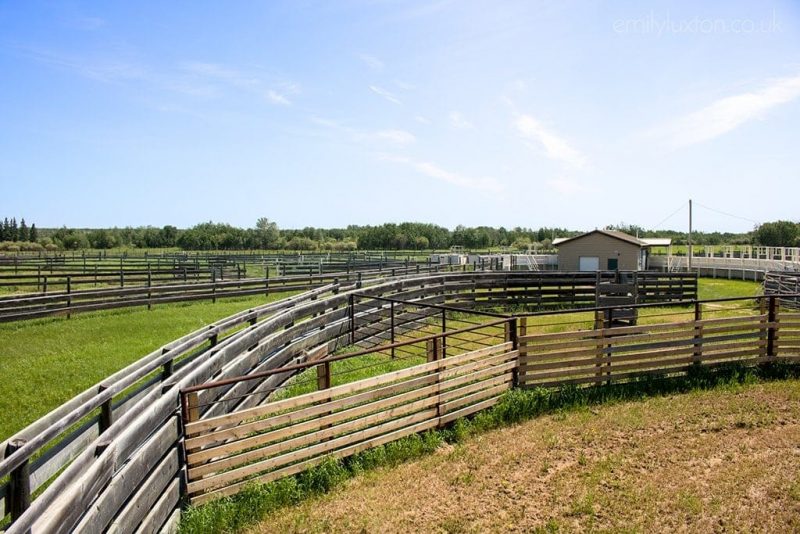
On the Backstage Bison Tour, you can learn all about the conservation efforts at Elk Island and the winter-time bison handling process. The expert guides can explain the history of bison in Canada, and the strong relationship they have with the local area.
Wildlife Spotting
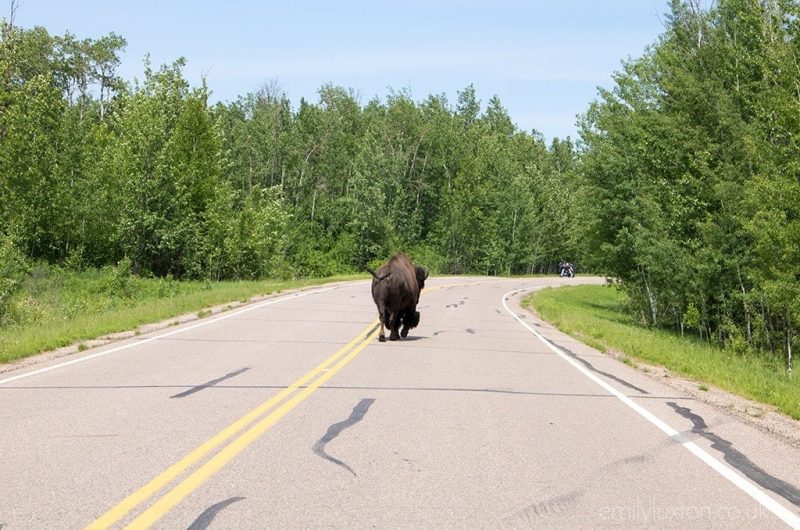
Depending on the time of year (and of the day), you have pretty strong chances to spot bison as you drive through the park, or you can explore on foot or horseback to get a little closer. The bison roam freely through the park, so you never know where you might spot one.
Alongside the large herds of bison, Elk Island is home to numerous other wildlife. There are, of course, elk (although these are more elusive and rarer to spot than bison) and also moose, making this the densest population of hoofed mammals in Canada.
Elk Island is also a bird watcher’s paradise, with over 250 species calling the park home for at least some of the year – including pelicans, herons, and cormorants. Among the other animals to call this area home are lynx, deer, hares, red squirrels, and coyotes. And in the many lakes, it’s common to spot beavers hard at work on their lodges and dams.
Ukrainian Cultural Heritage Village
Just up the road from Elk Island is the unexpectedly cool Ukrainian Cultural Heritage Village. On paper, this “living museum” sounds like the stuff of school trips. But in reality, it’s a much more fun and fascinating way to learn about Alberta’s strong Ukrainian heritage.
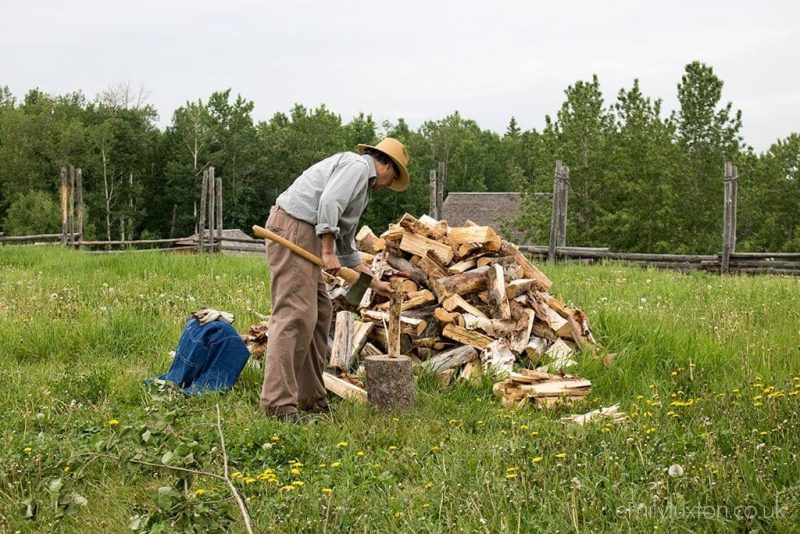
Canada’s prairies had huge numbers of Ukrainian settlers, especially between 1892 and 1930. To encourage experienced European farmers to abandon everything and start a new life in Canada, Ukrainian settlers were offered 160 acres of land completely free; provided they built a structure on it within the first three years. Pretty good offer, really!
The land you were assigned was pretty much random, so life could be pretty hard for those early settlers. But they stuck with it, creating small Ukrainian communities which have a lasting impact on the local culture to this day. For example, you’ll find pierogi (pyrohy) all over the east-central Alberta region – including Edmonton!
The Ukrainian Cultural Heritage Village is a living museum, made up of genuine restored buildings and furniture and staffed by actors who remain fantastically in character, to show you exactly what life would have been like on the Canadian Frontier in the early 1900s.
Hiking & Biking
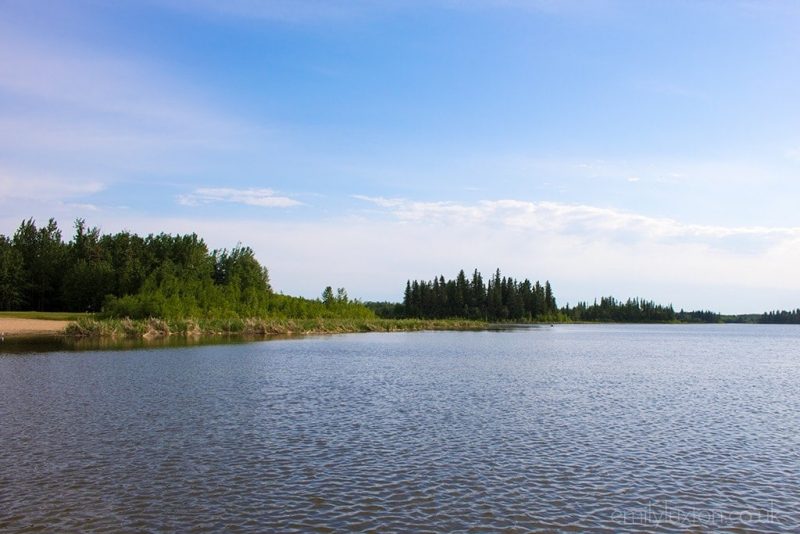
Enjoy one of the numerous walking and hiking trails around the park. It’s a pretty flat area, so most walks are fairly easy, and they’re a great way to get closer to nature. All the trails in Elk Island are multi-use, so you can also explore by bike or on horseback if you fancy it.
Popular Hikes
- Shirley Lake Trail – 11.6 km, moderate. Good chance to spot bison, moose and elk.
- Lakeview Trail – 3.7 km, easy. Great views of Astotin Lake.
- Amisk Wuche Trail – 2.7 km, moderate. Boardwalks through marsh and forest.
- Moss Lake Trail – 4.8 km, moderate. Through forests and grassland. Spot beaver dams on Moss Lake.
- Tawayik Lake Trail – 15.1 km, difficult. A long hike through diverse scenery.
Watersports
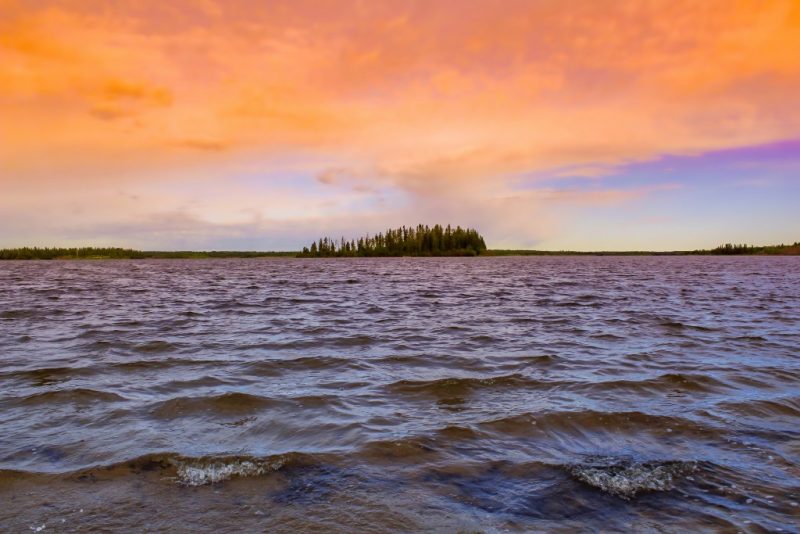
With so many beautiful lakes, it’s no surprise that there are plenty of watersports to enjoy at Elk Island. You can rent kayaks, canoes, and SUP boards from Ridge Wilderness Adventures at the Astotin Lake Recreation area. They also offer tours and courses.
Winter Sports
When winter hits, there are still plenty of adventures to be had in Elk Island, surrounded by a winter wonderland of snowy landscapes. Spotting wildlife can also be easier during the winter months.
- Snowshoeing – Rent snowshoes at the Wahkotowin Visitor Information Centre. Snowshoes can be used on any trail in the park, and are a great way to explore the snowy landscapes.
- Ice Skating – There’s a seasonal ice skating area at Astotin Lake (conditional on weather and snow cover). It’s a good idea to contact the visitor centre before visiting, to check conditions.
- Cross-country skiing – Most of the park trails are multi-use, which includes cross-country skiing. There’s nowhere to rent skis, though, so you’ll need to have your own.
Watch the Northern Lights
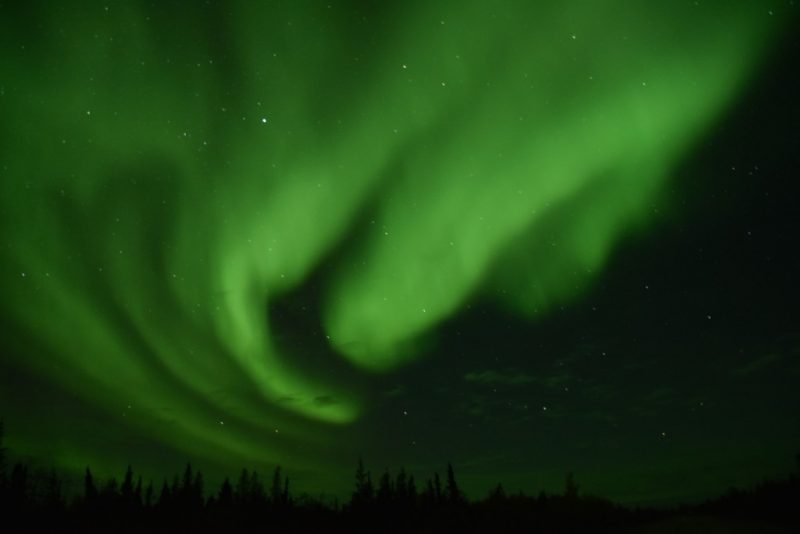
Edmonton is one of the best places in Canada to see the Northern Lights, and Elk Island is one of the best places in Edmonton to watch them. Check out Aurora Watch for a forecast when you’re visiting. Settle down by the lake with a flask of cocoa (or a nice bottle of wine), or make smores over a campfire while you wait – and you may just be rewarded with a stunning display!
Getting to Elk Island
There’s no public transport directly to the National Park, so the best way to get there is to drive. If you’re staying in Edmonton, you can rent a car from around £35 a day (check latest prices here).
There are three main entrances to Elk Island. If you’re coming from Edmonton, the most convenient is the south entrance via Highway 16 East. This is also the main park entrance, where you’ll find the Visitor Centre.
However, the main entrance can get very busy, especially on weekends in summer, so you may want to drive to one of the other entrances. The North and West entrances are usually quieter, and are closer to the Astotin Lake Recreation Centre.
How to reach Elk Island without a car:
It’s still possible to visit Elk Island if you don’t have a car, although it’s trickier.
Parkbus: If you’re visiting on a Saturday or Sunday, you can book a ride on the Parkbus Elk Island Express. The bus departs at 8:30am from MEC in downtown Edmonton and leaves the park at 3:30pm to return to the city by around 5:45pm. There is a $15 reservation deposit, which includes park entrance fees.
Taxi: In theory, you could take a taxi, but it would probably set you back around $110-$140 CAD, and many taxi drivers would probably refuse to drive you that far.
Where to Stay at Elk Island
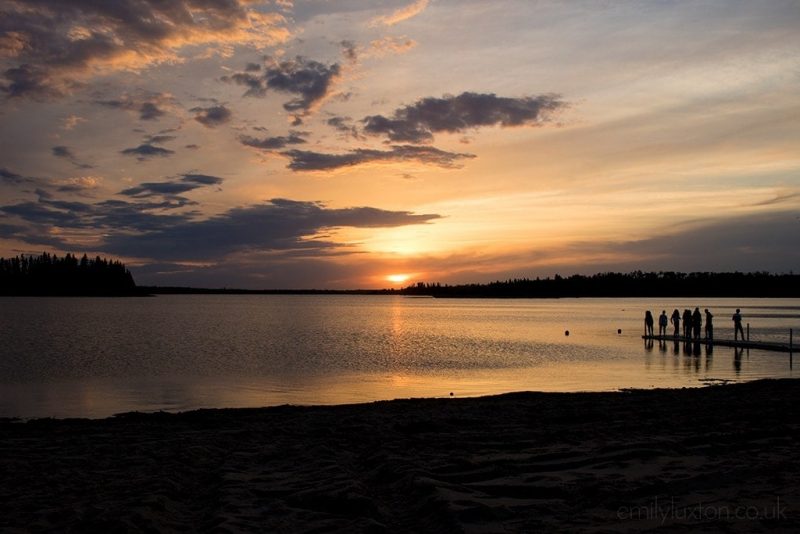
Camping is the best way to really make the most of a visit to Elk Island! It’s such a great experience and the only way to see the park at all hours of the day. During summer, when the sun sets at around 10pm, a barbecue by the lake is the perfect way to make the most of the long hours of sunshine.
Elk Island Campgrounds
- Astotin Lake Campground – wilderness camping
- Astotin Lake Group Camping Area – for large groups
- Oster Lake Backcountry Campground – hike-in, tenting-only
- oTENTik – glamping (see below)
Glamping at Elk Island
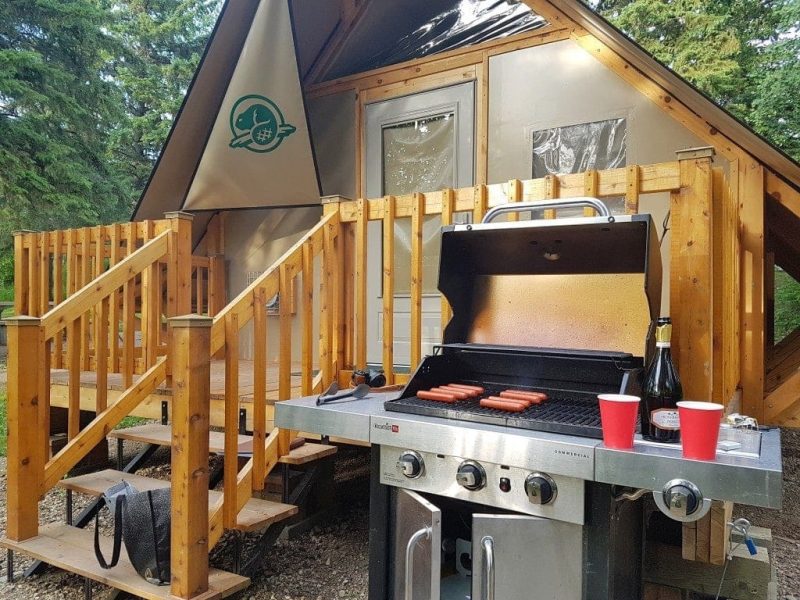
If you’re not a massive fan of sleeping under canvas, check out the oTENTik tents at the Astotin Lake Campground. These are enormous, semi-wooden structures that are halfway between a tent and a lodge! They have proper beds, with mattresses, and sleep up to six people pretty comfortably.
The tents have a USB charger, an electric heater for winter, and even a table and chairs inside. Outside, you have a picnic table, fire pit, and a big gas barbecue for cooking. It’s such a cool experience, and one that combines the best bits of camping with a few home comforts and mod-cons, so you don’t have to go right back to basics!
Find the full list of Elk Island campgrounds here.
Top Tips for Visiting Elk Island National Park
Best time to visit
The park is pretty amazing all year round. Summer months bring sunshine and perfect conditions for hiking and watersports. In winter, the park is covered in snow, but it’s still worth a visit – you can rent snowshoes to go for a bit of a trek over the relatively flat grounds. In Astotin Lake, they set up a small ice skating area for skating. Winter is also the best time to spot elk and moose.
Spring (April and May) is baby bison season, while summer (late July to August) is rutting season, when you can see the male bison fighting.
What to Pack for Elk Island
In summer, the mosquitoes at Elk Island are no joke. They were the biggest and most vicious I’ve ever seen (and I’ve been to the Amazon!). So pack strong mosquito repellent and dress sensibly. Mozzies are attracted to dark colours, so loose-fitting clothes in light browns and whites are a good idea. I still love these zip-off adjustable hiking trousers from Mountain Warehouse, which come with built-in UV protection. Read my review here.
Since it’s a relatively flat park, with no mountains, you don’t really need to bring any specific gear. Just whatever you’d normally wear for hiking and outdoor activities.
If you’re camping but want to travel light, there are Equipped Campsites that provide most of the equipment you’ll need. This includes the tent, sleeping pads, dining shelter, camping chairs, propane stove, lantern and cooking gear. You’ll still need to bring your own food, sleeping bags, and anything else you think you’ll need!
Read More
The Perfect 1-Week Road Trip in Alberta, Canada
Southern Alberta Road Trip Itinerary and Route
Got a question about Elk Island National Park, or a tip of your own that could help fellow travellers? Share in the comments!
I’ll never forget sitting by the lake watching sunset… and trying to start the fire! Ha ha happy memories and a lovely blog for anyone planning to visit soon!
Haha yep… we are queens of the outdoors aren’t we?!